
Green Tea
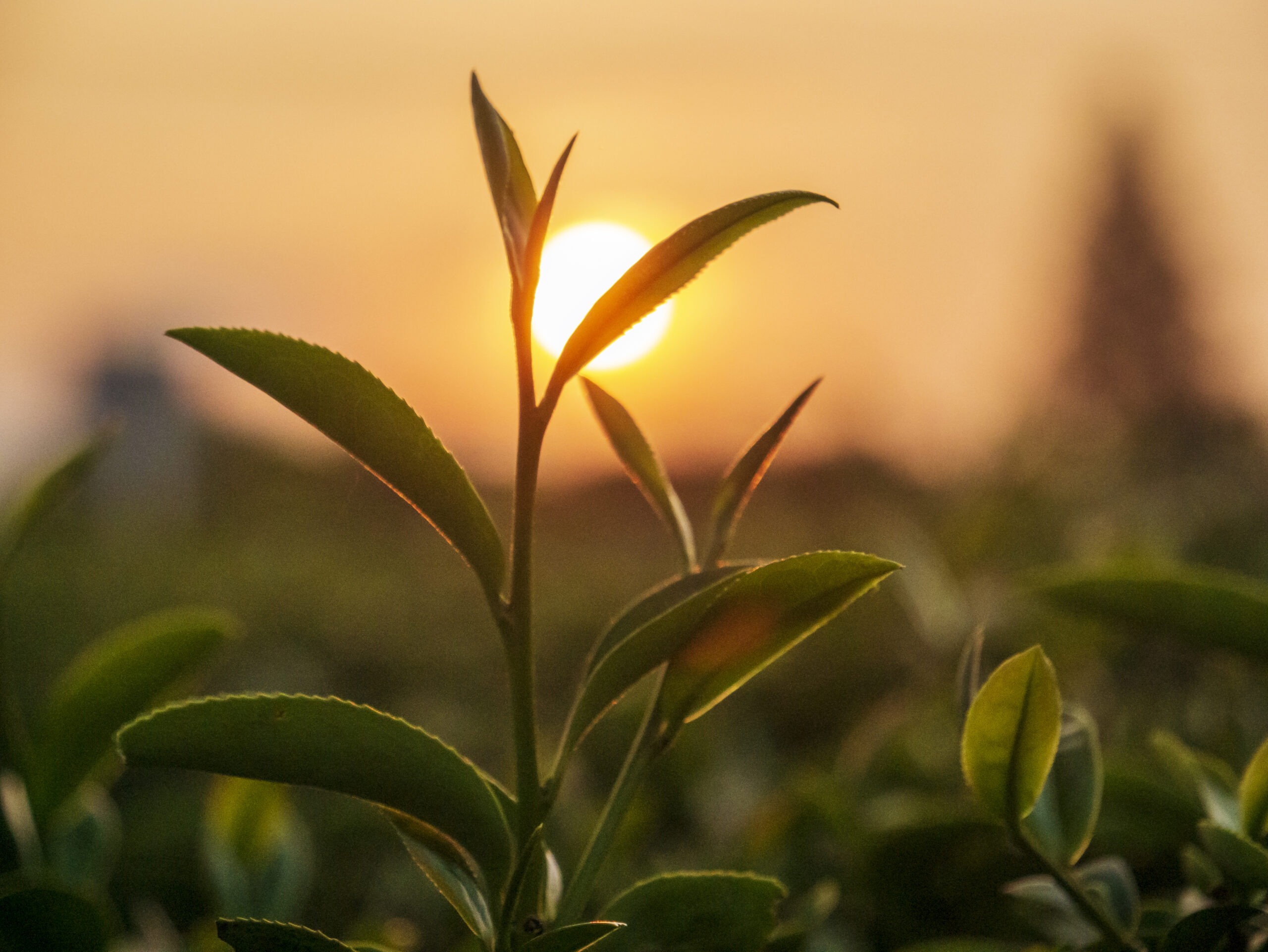
Green tea is crafted to preserve the freshness of the leaf. Shortly after picking, the leaves are heated — steamed in Japan or pan-fired in China — to stop enzymatic oxidation. They are then rolled and dried. This process keeps the color vibrant and the flavors bright, often bringing notes of grass, fresh vegetables, chestnut, or sea breeze. The liquor ranges from pale green to yellow-green.
White Tea
White tea undergoes the least intervention. Young buds and tender leaves are gently withered and dried, allowing only minimal, natural oxidation. Because of this simplicity, white teas tend to be delicate and nuanced, with flavors that can suggest honey, wildflowers, melon, or hay. The brew is typically very light in color, from pale gold to soft peach.
Yellow Tea
Yellow tea is rare and traditionally produced in small quantities. It begins similarly to green tea, but includes a special step known as “sealed yellowing,” where warm leaves are lightly wrapped or heaped to mellow their character. This gentle process softens grassy notes and creates a smooth, rounded profile with subtle sweetness. The infusion shows a warm golden hue.
“Turquoise” Tea (Oolong)
Often called oolong, “turquoise tea” refers to partially oxidized teas that sit between green and black. After withering, the leaves are gently bruised to initiate controlled oxidation, then heated to halt the process, rolled, and dried — sometimes with additional roasting. Depending on the style, oolongs can range from fresh and floral to deep and toasty, with colors from light gold to amber.
Black Tea
Black tea is fully oxidized, giving it a dark leaf and a rich, robust character. Leaves are withered, rolled or cut to expose their juices, then allowed to oxidize before being fired dry. This creates complex flavors that may include malt, dried fruit, cocoa, or spice. The brewed liquor typically appears coppery red to deep brown.
Red Tea
The term “red tea” can have two meanings depending on context. In Chinese terminology, it refers to what is known in English as black tea, named for the reddish color of the infusion. In Western usage, it often refers to rooibos — a naturally caffeine-free herbal infusion from South Africa made by oxidizing the needle-like leaves of Aspalathus linearis. Rooibos produces a smooth, naturally sweet cup with a reddish color.
How Processing Shapes Color
- White tea: gently withered and dried, minimal oxidation.
- Green tea: heated early to prevent oxidation, then shaped and dried.
- Yellow tea: similar to green but with an added mellowing stage.
- Oolong (“turquoise”): partially oxidized through careful bruising.
- Black tea: fully oxidized before drying.
- Red tea: either black tea in Chinese naming or rooibos as an herbal infusion.