

As a dedicated gardener and passionate plant lover throughout my life, I’ve consistently appreciated the remarkable adaptability of herbs. These versatile plants extend far beyond their roles in the kitchen, offering substantial aesthetic appeal in landscaping designs. In my personal garden located in Swarthmore, Pennsylvania, I’ve discovered that a wide array of culinary herbs provides not only visual charm but also sturdy form and durability, positioning them as excellent choices for both container arrangements and in-ground planting areas.
Taking a brief walk through my residential garden in Swarthmore reveals numerous spots where I’ve incorporated culinary herbs purely for their decorative qualities. Approximately five years back, my front yard featured a worn-out cottage-style garden that desperately required a makeover. I was particularly captivated by the gravel-based landscapes at the Scott Arboretum of Swarthmore College and the stunning displays at Chanticleer in Wayne, Pennsylvania. Drawing inspiration from these exemplary gardens, I excavated between six and eight inches of existing soil, laid down a layer of ½-inch granite gravel, and introduced a selection of plants known to flourish under such well-draining, arid conditions.
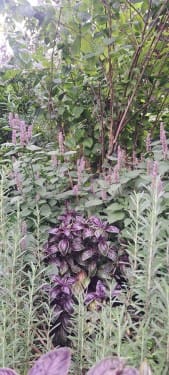
Positioned prominently in the front yard, every plant selection needed to withstand deer browsing effectively. A significant number of herbs originating from Mediterranean regions excel in these intensely sunny, hot environments with superior drainage. In previous gardening efforts, I faced challenges in cultivating lavenders successfully, likely attributable to overly dense soil and inadequate drainage. However, within the gravel garden setup, they have proven entirely robust, developing into substantial, rounded mounds over the ensuing five years. My preferred variety is Lavandula x intermedia Phenomenal™. During the summer period, it yields copious spikes adorned with delicate lavender blooms. I intentionally retain these flower spikes through late summer and into autumn to enhance the garden’s architectural elements. Eventually, I trim away the spent flowering stems, preserving compact shrub forms that provide winter visual interest through their appealing gray-silver foliage. Lavenders stand out as fully deer-proof and rank among the premier plants for drawing in pollinators across the garden landscape.

Equally successful in the gravel garden is a compact cultivar of catmint, Nepeta racemosa ‘Walker’s Low’. I employ ‘Walker’s Low’ as a low-profile ground cover or border planting along the front pathway. It bursts into bloom profusely during May, displaying soft blue-violet flowers. Following the main bloom cycle, I perform a thorough shearing on the catmints, which effectively revitalizes them and maintains a tidy appearance through the remainder of the season. I’ve cultivated various other catmint varieties with comparable outstanding results. On a recent visit to the expansive wholesale nursery Walter’s Gardens in Michigan, I inquired about their top three best-selling plants. The list included a daylily, a hosta, and notably, Nepeta ‘Cat’s Pajamas’.
Throughout the warmer summer season, I strategically place decorative pots in multiple locations around the garden. Some grace the front patio within the gravel area, enhancing the entry stoop, while others line the bluestone patio at the rear of the house, and additional ones highlight the summer house structure. Across the years, I’ve experimented with numerous herbs to provide striking ornamental effects in these containers. Various types of sages (Salvia officinalis) boast exceptionally handsome foliage, suitable either as standalone focal points in pots or as complementary elements in mixed plantings. The ‘Icternia’ variety features a striking dark green patch at the leaf center, bordered by bright chartreuse margins. ‘Purpurascens’ displays a blend of green and deep purple tones on its leaves. ‘Tricolor’ offers a beautiful variegation incorporating green, white, purple, and pink hues, while I particularly favor ‘Berggarten’ for its expansive, robust leaf structure. These sages perform optimally in soil that drains freely and receives predominant sunlight exposure.
Over multiple years, I’ve maintained several specimens of bay laurel (Laurus nobilis) either on the patio or positioned along pathways in containers within the vegetable garden area. I appreciate them for their rich, dark green, wide leaves, cultivating them as multi-stemmed shrub forms, and occasionally as elegant standards featuring a solitary trunk supporting a meticulously clipped, topiary-style spherical crown.
Rosemary, now classified as Salvia rosmarinus (formerly Rosmarinus officinalis), mirrors lavenders with its slender, persistent evergreen foliage. Upright, bushy selections such as ‘Tuscan Blue’, ‘Arp’, ‘Salem’, and ‘Athens Blue Spires’ are among my choices. The majority of rosemary varieties produce charming blue flowers that add to their allure. Additionally, I incorporate trailing or prostrate rosemary types, like ‘Prostratus’ or those from the Prostrate Group, allowing their foliage to cascade gracefully over container edges. Although I haven’t yet integrated rosemary into the gravel garden, I am confident that its conditions—sunny, hot, and sharply drained—would suit rosemary ideally, potentially improving its winter hardiness even in USDA Zone 7.

Reflecting on 25 years of gardening in my home landscape, I’ve consistently observed that virtually all the herbs I’ve employed possess strong deer resistance, remarkable drought tolerance, excellent support for pollinator populations, and impressive adaptability to evolving climate patterns. In addition to their invaluable contributions to culinary applications, these herbs serve as exceptional ornamental selections. They prove straightforward to maintain, typically needing only periodic deadheading for sages, rosemary, and lavender, along with light grooming during summer and post-winter cleanup. This overview represents merely a glimpse into the extensive array of exceptional herbs suitable for enhancing garden aesthetics. In my experience, herbs have emerged as some of the most dependable and gratifying plants available, delivering consistent beauty, delightful fragrances, and reliable performance across multiple seasons.