
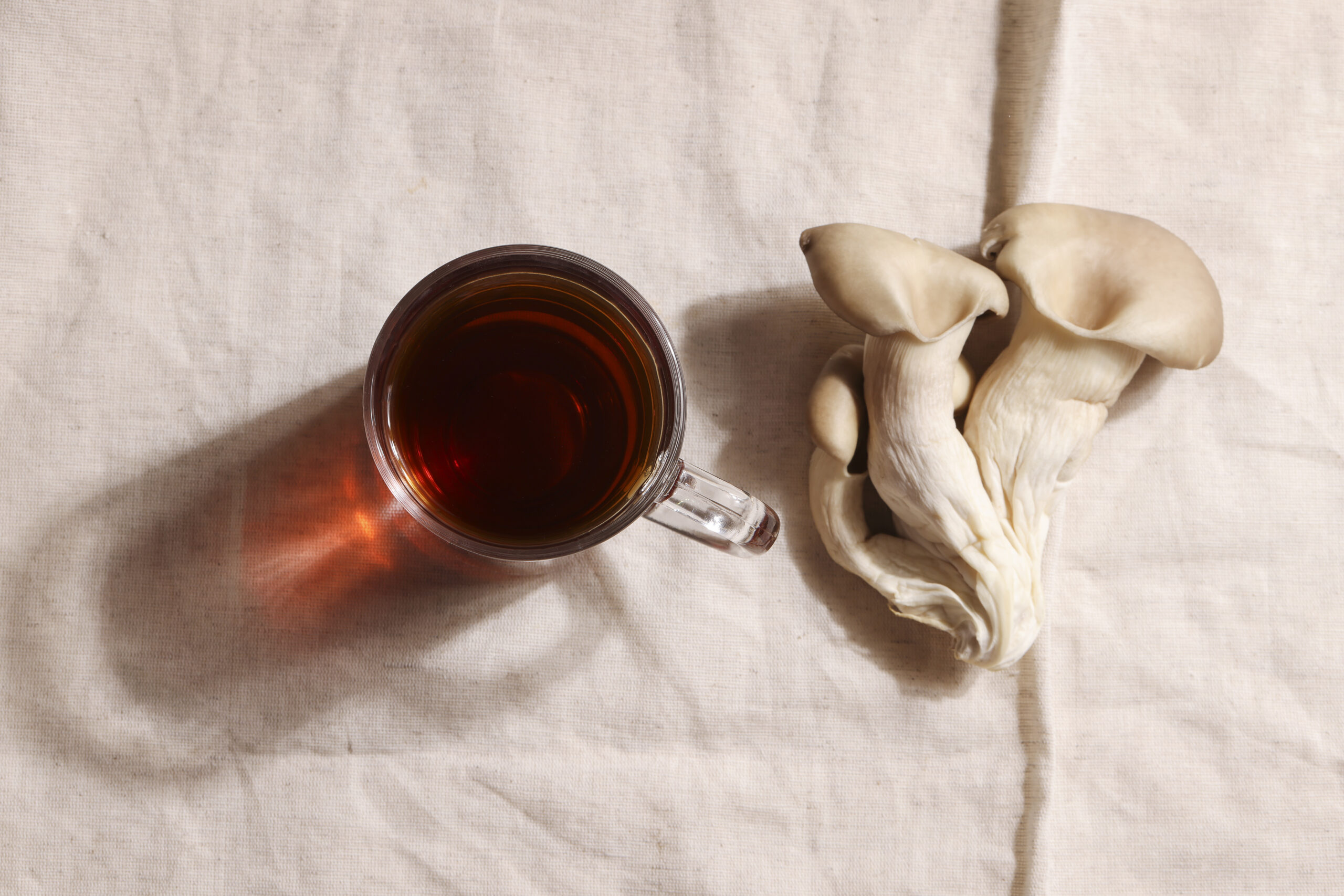

Understanding how these mushrooms are traditionally prepared — and what makes each one unique — can help you explore this category with confidence and curiosity.
Why Brew Mushrooms as Tea?
Many functional mushrooms have tough cell walls made of chitin, which require heat and time to release their key compounds. This is why slow simmering or extended steeping is often recommended rather than quick infusions. Preparing mushrooms as tea allows their earthy aromas and complex flavors to unfold gradually, creating a cup that feels both grounding and comforting.
Lion’s Mane Tea
Lion’s mane tea is appreciated for its mild, slightly sweet earthiness and smooth character. Traditionally prepared by simmering dried slices or using a hot water extract, it produces a gentle cup often associated with clarity and focus. Many people enjoy lion’s mane tea in the morning or early afternoon as part of a calm, attentive routine.
Reishi Tea
Reishi tea is known for its deep, bittersweet profile and long history in traditional herbal practices. Because the mushroom is woody and dense, it is usually simmered for an extended period to extract its characteristic compounds, including triterpenes and polysaccharides. Reishi is often chosen for evening rituals, where its grounding nature complements moments of rest.
Chaga Tea
Chaga tea produces a dark, amber brew with notes that can resemble vanilla, birch, and mild earthiness. Traditionally prepared through slow decoction, chaga contains a range of antioxidant compounds and has been used historically in northern climates as a warming, sustaining drink during long winters.
Cordyceps in Herbal Blends
Cordyceps is less commonly brewed alone but appears frequently in blends highlighting cordyceps benefits related to vitality and stamina. Its flavor is mild and slightly savory, making it well suited for pairing with cacao, spices, or roasted herbs in functional drinks.
Tea vs Mushroom Coffee
While mushroom coffee has introduced many people to functional fungi, tea preparations offer a slower and more traditional experience. Brewing lion’s mane tea or reishi tea allows for a quieter ritual, where aroma, temperature, and time become part of the enjoyment — much like preparing loose leaf tea.
Tips for Brewing Functional Mushroom Teas
- Use gentle simmering (15–30 minutes or longer) for woody mushrooms like reishi or chaga.
- For powdered extracts, simply dissolve in hot water and stir well.
- Combine with spices like ginger or cinnamon to balance earthy notes.
- Consider blending with traditional teas for layered flavor.
FAQ
What is the difference between mushroom tea and mushroom coffee?
Mushroom tea is typically caffeine-free and focuses on slow extraction of mushroom compounds, while mushroom coffee blends mushrooms with coffee for a combined flavor and energy experience.
How often can you drink functional mushroom tea?
Many people enjoy these teas daily as part of a balanced routine, though preferences vary depending on individual needs and tolerance.
Do functional mushroom teas taste strong?
Flavors range from mild and slightly sweet (lion’s mane) to bitter and robust (reishi). Blending with herbs or spices can soften the profile.
Are mushroom teas part of traditional herbal practices?
Yes — mushrooms like reishi and chaga have been used for centuries in traditional preparations, often brewed slowly as decoctions rather than quick infusions.
In the Teacup
Exploring functional mushroom teas opens a window into traditions that value patience, warmth, and subtlety. Whether you are drawn to the gentle character of lion’s mane tea, the depth of reishi tea, or the comforting richness of chaga, these infusions invite a slower rhythm — one cup at a time.
Disclaimer: This article is for informational and educational purposes only. It is not intended as medical advice, diagnosis, or treatment. Functional mushrooms and herbal products may affect individuals differently. Always consult a qualified healthcare professional before adding new supplements or herbal preparations to your routine, especially if you are pregnant, nursing, taking medication, or managing a health condition.