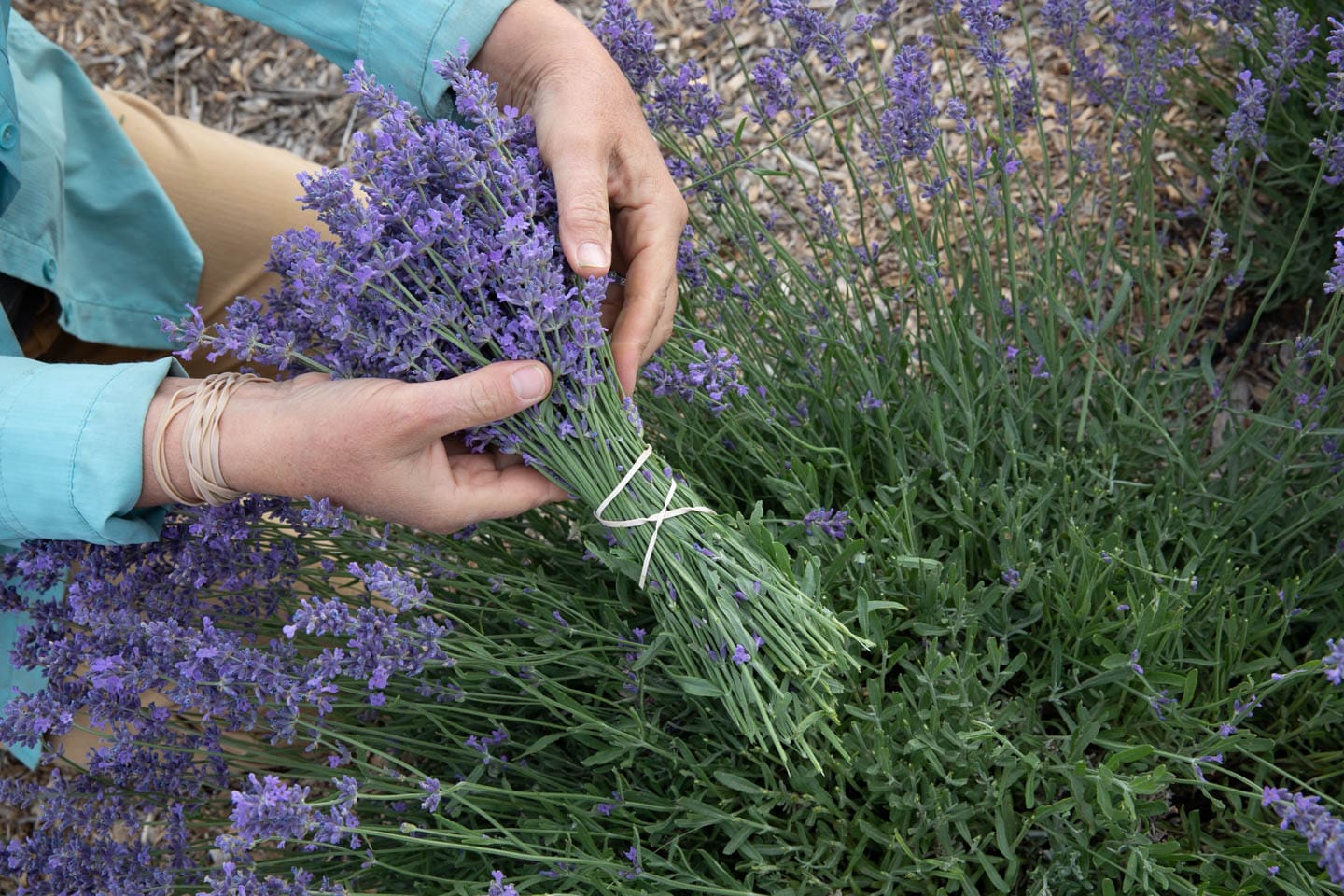


Although the vibrant summer blooms of lavender have faded, there are plenty of ways to savor these gathered flowers throughout the remaining seasons. The cooler winter months offer an ideal opportunity to delve deeply into innovative uses for plants, particularly in the realm of culinary arts. In the warmer season, we harvest and bundle the lavender precisely when between 25% and 50% of the corollas have opened, ensuring the herb reaches peak quality for kitchen applications. On our farm, it’s a familiar scene to see clusters of flowering spikes in shades of pink, violet, and blue-violet suspended upside down for drying. Once fully dried, the delicate flowers are carefully removed from their stems, or debudded, and then sifted through screens of different mesh sizes to eliminate any dust or extraneous plant material. With all the buds stripped from the stems, they are then carefully stored away for deployment in recipes across the ensuing months.
Lavender stands as a blooming herb belonging to the expansive Lamiaceae family. The essential part we utilize in cooking is the calyx, which houses the majority of the herb’s distinctive flavors. Emerging from this calyx is the corolla, characterized by its unique tube structure and formed from five united petals. Typically, these petals detach from the calyx as the lavender dries. While the petals themselves lack significant essence, they serve beautifully as edible garnishes when fresh. In contrast, dried lavender buds possess three times the concentration of flavor compared to their fresh, blooming counterparts. This makes them far easier to incorporate incrementally into dishes, allowing for precise adjustments rather than overcompensating after excess addition.

Incorporating lavender into recipes for desserts, savory dishes, or beverages can transform your culinary creations into sophisticated gourmet experiences. Though its flavor profile is subtler than that of its more robust mint relatives, employing lavender sparingly consistently yields superior outcomes, emphasizing the importance of moderation. Recipes are inherently flexible—feel free to increase or decrease the lavender quantity based on your personal palate preferences.
Lavender’s versatility extends far beyond the realm of cookies and cakes; its applications span a wide array of preparations, particularly those featuring rich, fatty ingredients. This is due to its ability to slice through heaviness and elevate the entire flavor spectrum, such as when infusing cream with lavender or tucking it alongside complementary herbs beneath the skin of a roasting chicken. Simple techniques abound, like steeping lavender in a basic syrup or honey before stirring it into lemonade, iced tea, coffee, cocktails, or even delicate meringues. For dairy-based treats, consider using a tea infuser filled with lavender buds to infuse cream or milk prior to incorporating it into puddings, custards, crème fraîche, ice creams, or whipped toppings.

To harmonize lavender’s mid-range notes, pair it with vibrant citrus elements like lemon or orange juice along with their zests. Venture past conventional combinations by considering the molecular foundations of exceptional pairings. The primary chemical constituents responsible for lavender’s signature aroma mirror those in its taste: linalyl acetate, linalool, and terpinene-4-ol. These identical compounds appear in various other herbs, spices, and foodstuffs, often leading to harmonious matches. Herbs such as basil, coriander, lemongrass, and mint share these chemical affinities, making them excellent companions for lavender. Similarly, stone fruits like peaches, nectarines, and cherries harbor notable amounts of linalool and limonene, both present in lavender as well. Experiment with lavender-enhanced peach pies or cherry preserves for a truly indulgent delight!
Selecting the Right Lavender Species for Cooking
Determining which lavender qualifies as ‘culinary’ ranks among the most frequent inquiries from customers and lavender aficionados, alongside questions about cultivation. People often ask, ‘What exactly defines culinary lavender?’ and ‘How does it differ from regular varieties?’ My response is straightforward: every type of lavender is technically edible, but palatability varies greatly.

Different lavender species exhibit distinct concentrations of chemical compounds, resulting in varied aromas and tastes, some far more appealing than others. The standout choice for culinary purposes is Lavandula angustifolia, commonly known as English or true lavender, thanks to its elevated levels of linalyl acetate and linalool coupled with reduced terpinene-4-ol. Certain cultivars within this species boast even higher linalyl acetate content, imparting intensely floral qualities, such as ‘Royal Velvet’, ‘Lavang 21’ VIOLET INTRIGUE, ‘Buena Vista’, and ‘Sharon Roberts’. These profoundly floral lavenders complement black and green teas beautifully, as well as robust herbs like sage, savory, oregano, and basil.
Particularly among pink-flowered cultivars, some strike a balanced profile in their key compounds, introducing subtle spicy undertones—examples include ‘Melissa’, ‘Miss Katherine’, ‘Nana Alba’, and ‘Croxton’s Wild’. These spice-inflected varieties shine in chili spice blends, especially when combined with peppers like guajillo, Aleppo, or paprika. Meanwhile, varieties like Lavandula angustifolia ‘Folgate’ carry a refreshing minty essence, rendering them ideal matches for chocolate and cacao creations. In contrast, species such as Lavandula × intermedia (lavandin), Lavandula lanata, Lavandula dentata, and Lavandula stoechas are dominated by high cineole and camphor levels, yielding potent, astringent aromas and bitter flavors that limit their culinary appeal. That said, select Lavandula × intermedia cultivars like ‘Provence’ and ‘Gros Bleu’ temper these compounds, making them viable for cooking, particularly with rosemary, sage, and thyme in beef or chicken dishes.

If you lack access to these precise cultivars, rest assured—simply experiment with whatever lavender grows in your garden. Blend the buds with assorted herbs and spices, or use them solo, to uncover unique flavor outcomes. A practical tip: gently crush the tiny buds between your fingertips to release the oils from the calyx, revealing the predominant scents and tastes unique to that particular lavender variety in bloom.
Delicious Recipes Showcasing Culinary Lavender
For enthusiasts ready to unlock lavender’s full potential in the kitchen, these three straightforward recipes provide an excellent starting point:
Sunshine Tea
- ½ cup German or Roman chamomile
- ½ cup mild, low-caffeine, floral green tea, such as jasmine
- 2 tablespoons lemon verbena (or lemon balm as a substitute)
- 2 tablespoons floral-forward lavender, such as Lavandula angustifolia ‘Royal Velvet’
Combine all the ingredients thoroughly. Employ 1 teaspoon of the loose tea blend per 8-ounce serving. Allow it to steep for 4 minutes. This batch produces enough for 18 cups.
Lavender Chili Spice Mix
- 2 tablespoons toasted cumin seeds
- 1 tablespoon toasted coriander seeds
- 1 tablespoon dried culinary lavender buds, spice-oriented such as Lavandula angustifolia ‘Melissa’
- ½ teaspoon salt
- 2 tablespoons ground chili of choice (medium to hot varieties like paprika, guajillo, or Aleppo)
Process the toasted cumin and coriander seeds together with the lavender buds and salt using a food processor or dedicated herb grinder. Incorporate the dried chili powder and pulse once more to achieve a uniform mixture. Transfer to a sealed glass jar for storage. This versatile blend enhances chili recipes, Middle Eastern cuisine, or can be dusted over sweet potato fries for a flavorful twist.

Lavender Chili Blend: Highlighting ‘Miss Katherine’ lavender with Leutschauer paprika chili, toasted cumin and coriander, plus salt.
Lavender Cocoa
- 1 tablespoon mint-forward dried culinary lavender buds, finely ground (such as Lavandula angustifolia ‘Folgate’)
- 2/3 cup Dutch-process cocoa powder
- 1 cup confectioner’s sugar
Mix the ground lavender buds, cocoa powder, and sugar in a spacious bowl, then pass the mixture through a fine mesh sieve for smoothness. Store in an airtight container. To prepare, stir ⅓ cup of the mix into ⅔ cup of hot milk or a milk alternative, coffee, or employ it as a decorative dusting on cakes and cupcakes.
Pro Tip: Achieve optimal lavender dispersion by first grinding it with 1 tablespoon of granulated sugar prior to blending with the cocoa and confectioner’s sugar. This technique ensures the lavender is fully pulverized for a seamless integration.