
Within herbal communities, there’s a lighthearted stereotype about individuals who embody the essence of Blue Vervain. These are typically high-achieving, Type A personalities who thrive on structure, checklists, and maintaining control over their surroundings. However, this drive often leads to heightened stress levels as they attempt to manage every detail. Such people frequently store tension physically, especially in the neck and shoulder areas, and they embody a “work hard, play hard” lifestyle. In Ayurvedic terms, these individuals exhibit a significant excess of Pitta energy.
The therapeutic qualities of Blue Vervain, scientifically known as Verbena hastata, are ideally suited for those with this profile, as well as anyone displaying similar traits—a common occurrence in our fast-paced modern world. This herb falls under the category of nervines, which are plants that provide nourishment and bolster the nervous system. Blue Vervain offers profound relaxation, with effects that can be perceived almost immediately. It effectively transitions the body from a heightened state of arousal and worry into one of serenity and ease. One key mechanism behind this transformation is its intensely bitter taste profile. Upon tasting bitterness on the tongue, the body initiates a cascade of digestive responses, beginning with increased saliva production, which is the most readily apparent. This process extends throughout the entire gastrointestinal system, triggering the secretion of hydrochloric acid, pancreatic enzymes, and bile. Simultaneously, it shifts the autonomic nervous system away from the “fight, flight, or freeze” mode toward the restorative “rest and digest” phase, also referred to as “rest and repair.” This physiological shift is orchestrated through intricate interactions involving the vagus nerve, taste receptors, and hormones such as gastrin. Beyond the science, countless global traditions have long acknowledged the value of bitter and aromatic herbs in promoting bodily relaxation to enhance digestion and foster nervous system well-being. Iconic examples include the array of herbal digestifs prevalent across Europe and other regions, traditionally sipped in modest quantities either before or after meals to aid digestion.
This is precisely why I incorporate Blue Vervain prominently in my clinical herbal practice within a formulation called Rest & Digest Bitters. The exact composition adapts to the unique needs of each individual, but the foundational elements consistently blend digestive bitters with bitter nervine herbs such as Blue Vervain, Wood Betony (Stachys officinalis), and Skullcap (Scutellaria officinalis). This synergy allows users to harness the extensive advantages of bitters—including improved digestion, enhanced metabolism, better cardiovascular function, stabilized blood sugar levels, and nervous system support—while benefiting from the soothing, stabilizing effects of nervines. In today’s stressful environment, nervines stand out as particularly relevant herbal allies.

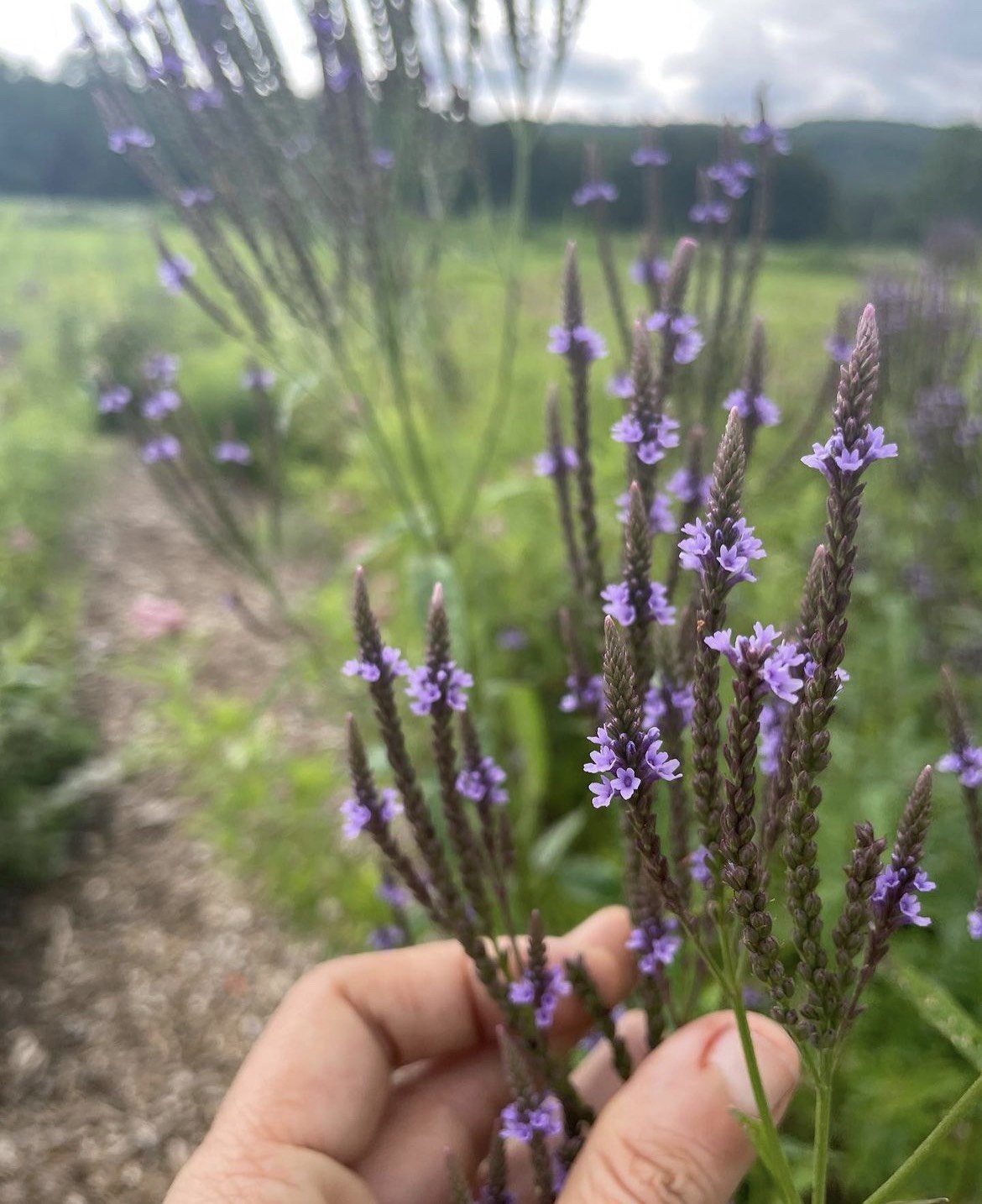
Blue Vervain is a native species to North America, favoring damp, moist soils where it thrives with minimal intervention and frequently self-propagates in garden settings, particularly in nutrient-rich, water-retentive ground. This season, abundant rainfall has led many gardeners to report exceptional growth in their Blue Vervain patches. While I generally discourage wild harvesting due to its limited abundance in our local ecosystem, it’s always a delight to spot and appreciate it during outdoor excursions. For those maintaining an herb garden, native plant area, or pollinator-friendly space, cultivating Blue Vervain is highly encouraged. It largely tends to itself while delivering powerful remedies for nervous system health.
The flowering tops represent the primary medicinal portion of the plant, which blooms during late summer, making this an optimal period to source it fresh. In my preparation routine, I prefer tincturing fresh Blue Vervain via the folk method, employing a 40-50% alcohol concentration. A successful tincture develops a deep, rich brown hue. Dosage recommendations should be personalized, beginning conservatively to gauge individual response. For folk-method tinctures, initiate with one full dropper squeeze—herbalists often call this a “dropperful,” despite it filling only about half the dropper. When addressing acute anxiety or muscle tension, particularly in the musculoskeletal system, allow 5-10 minutes to assess relief, then incrementally increase by one dropperful up to four, until symptoms ease. Subsequently, repeat dosing as required during the day. Once your effective amount is established, it can be administered 1-3 times daily for ongoing maintenance. Blue Vervain integrates seamlessly into bitters blends as well—detailed recipes follow below.
Rest & Digest Bitters
In my professional herbal consultations, I frequently encounter clients grappling with intertwined issues in their nervous and digestive systems. Over time, I’ve increasingly favored creating bitters blends that simultaneously target both areas. As I frequently emphasize to students and clients alike, bitters offer remarkable support for a broad spectrum of health concerns. The digestive and nervous systems maintain ongoing dialogue; relaxation in one typically promotes harmony in the other, and vice versa.
While each client’s final bitters recipe is tailored to their specific constitution, the essential structure unites bitter nervine herbs with aromatic carminative herbs. Carminatives enhance nervous system relaxation, stimulate circulation and motility in the digestive tract to alleviate gas and bloating, and introduce warming qualities that counterbalance the cooling nature inherent in many potent bitters. The foundational proportions outlined below serve as a reliable template for home preparation. I’ve also shared several client-inspired sample formulas, which may deviate slightly from these ratios due to my intuitive, free-form approach in practice. Use the base formula as your guide, and let the samples spark creativity and adaptation.
Basic Rest & Digest Bitters Formula Proportions

Basic Rest & Digest Bitters:
- Bitter Nervines: 70%
- Carminatives: 30%
Among my go-to bitter nervines for these bitters in clinical settings are Blue Vervain, Chamomile (Matricaria chamomilla), Wood Betony (Stachys officinalis), and Skullcap (Scutellaria lateriflora). Excellent alternatives include Catnip (Nepeta cataria), Motherwort (Leonurus cardiaca), Garden Sage (Salvia officinalis), and Lavender (Lavandula angustifolia).
Preferred carminatives to incorporate encompass Ginger, Cardamom, Cinnamon, Fennel seed, Orange Peel, and Fenugreek. Additional appealing options are Basil (Ocimum spp.), various Mints (Mentha spp.), and Bee Balm (Monarda fistulosa, M. didyma), with plenty more possibilities to explore.
Dosage: Administer 2 dropperfuls diluted in a small volume of water (equivalent to a shot glass) 5-10 minutes prior to main meals. This practice helps settle and center the body before eating while igniting optimal digestive processes.
Tailoring continues with individual constitutions in mind, always centering bitter nervines alongside aromatic carminatives for their multifaceted benefits: nervous system calming, digestive motility enhancement to reduce gas and distension, and thermal balance against the chilling effects of intense bitters.
Sample Formulas
Sample Formula #1
- Equal parts: Skullcap, Blue Vervain, Wood Betony, Lemon Balm, Ginger, Cardamom, Orange Peel
Sample Formula #2 (4 oz total)
- Skullcap: 30 ml
- Chamomile: 30 ml
- Catnip: 20 ml
- Ginger: 20 ml
- Orange Peel: 10 ml
- Cardamom: 10 ml
Sample Formula #3 (4 oz total)
- Burdock: 50 ml
- Blue Vervain: 20 ml
- Skullcap: 20 ml
- Fennel: 20 ml
- Cinnamon: 10 ml
Sample Formula #4
- Equal parts: Wood Betony, Blue Vervain, Chamomile, Cinnamon, Fenugreek
Sample Formula #5 (4 oz total)
- Skullcap: 30 ml
- Chamomile: 30 ml
- Ginger: 20 ml
- Catnip: 20 ml
- Orange Peel: 10 ml
- Cardamom: 10 ml
Sample Formula #6
- Equal parts: Skullcap, Blue Vervain, Wood Betony, Garden Sage, Orange Peel
May this exploration highlight the remarkable healing potential of Blue Vervain and motivate you to craft your personalized Rest & Digest Bitters for enhanced well-being.